Christian Henning
Machine Learning Researcher & Engineer.

Living in Zurich, Switzerland
I’m a machine learning researcher and engineer, drawn in equal measure to thinking deeply about frontier ML and to building systems that hold up in the real world. I also have broad interests in statistics, neuroscience, and cognitive science.
I completed my PhD at ETH Zurich, where I worked at the intersection of continual learning, Bayesian deep learning, and computational neuroscience — studying how neural systems learn adaptively and robustly over time, and how those principles might translate into machine learning systems.
In 2022 I joined Ethon, a Zurich-based startup building AI for industrial applications, as its first employee. I started out as an engineer on its computer vision product for visual quality inspection. Over time I came to own the product, shaping the roadmap with the people who used it and carrying it from prototype to global deployment. I pushed for research to get its own space, apart from day-to-day product work, and then built and led that R&D team. We trained our transformer-based computer vision models in-house.
In 2026 I joined AWS in Zurich, where I help organizations turn AI into business value.
This site is mainly a blog, and it runs in two threads. One is about machines that learn: from why ML’s notion of uncertainty is conceptually broken to the occasional wander into minds and machines. The other is about systems that last: the debts you consciously carry while building a product, and the invisible work that nobody rewards but everything depends on.
Outside of work, I’m often traveling or in the mountains — hiking, climbing, or skiing. I also enjoy bouldering, dancing, and the occasional deep-dive into random topics.
If you’d like to keep up to date, subscribe to the newsletter below.
latest posts
selected publications
-
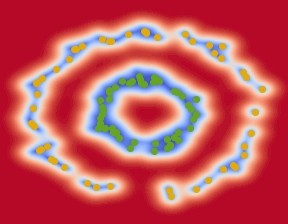 On out-of-distribution detection with Bayesian neural networksSee also our shorter workshop paper , 2021