-
Uncertainty Is Not Distribution-Free: Why Conformal Prediction Only Knows What Your Model Knows
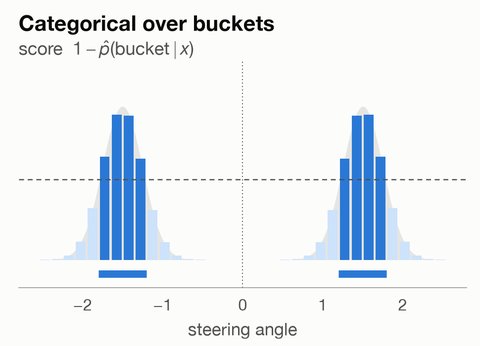
Conformal prediction guarantees coverage, but coverage can be exactly right and still uninformative, like accuracy on an imbalanced dataset. The sets only surface the uncertainty a model already has, so the real work is still in the model.
-
Opinion: What the Hugging Face Incident Changed in How I See the Current State of AI
AI still lacks long-term memory, so we have not achieved AGI. Yet a swarm of agents with no memory of their own pursued a long-term goal together. Why that surprised me, why we have to be careful creating collectives, whether intended or not, and why the risk is so hard to quantify.
-
A Good Predictor Is Not Yet a Good Forecaster: Why Forecasting Needs Knowledge Beyond the Data
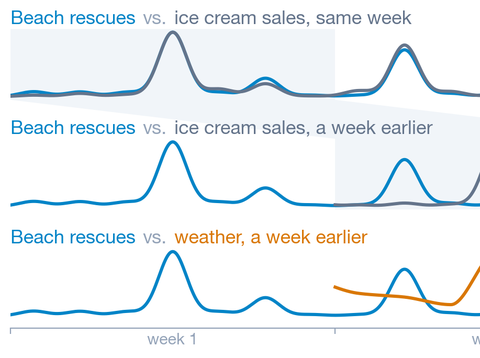
A model that predicts well can still forecast badly, because the inputs it needs are not known yet and the future may not look like the past. Prior knowledge can reach beyond the data, and a causal picture shows where to attach it.
-
Same Evidence, Opposite Certainty: Why AI Timelines Polarize on Shared Evidence
AI timelines never converge, a life-long belief about human intelligence keeps shaping how new evidence gets read, and an imprecise definition of AGI means the two sides were never comparing the same thing. The first is a well-documented mechanism from the psychology of belief polarization; the second is simply definitional.
-
Trust Is a Posterior: Why Good Work Can Only Be Appreciated Statistically
A shipped feature reveals almost nothing about how well it was built, because from the outside the quality of engineering work is a credence good. Trust accumulated across many projects is the only statistically valid way to price it.